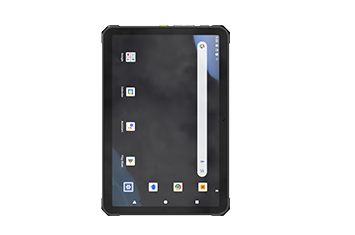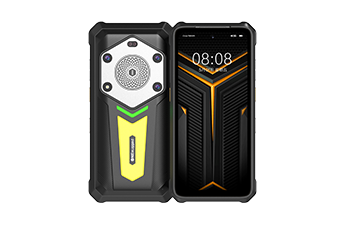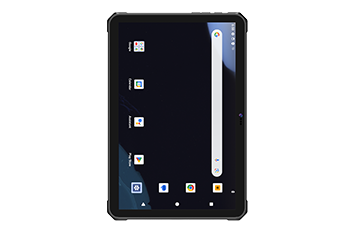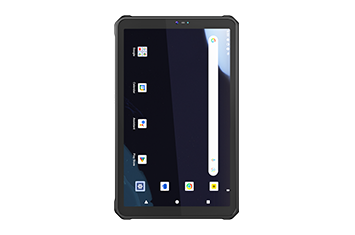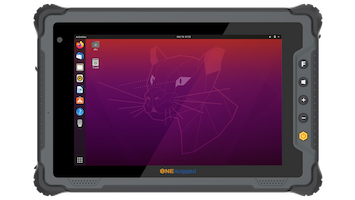

In the high-intensity environments of modern logistics hubs and automated distribution centers, frontline data capture dictates overall operational velocity. As enterprise facilities scale up their warehouse automation initiatives, relying on standard consumer smartphones or legacy data collection tools introduces severe liabilities. A single cracked screen or a delayed barcode scan during a tight fulfillment window creates immediate bottlenecks across the entire supply chain.
To eliminate hardware-induced failures and accelerate throughput, industrial solution architects are standardizing their mobility frameworks around the rugged pda scanner. Built specifically for continuous, high-volume data collection, an enterprise rugged handheld computer functions as a localized edge-computing terminal that bridges physical inventory with centralized Warehouse Management Systems (WMS).
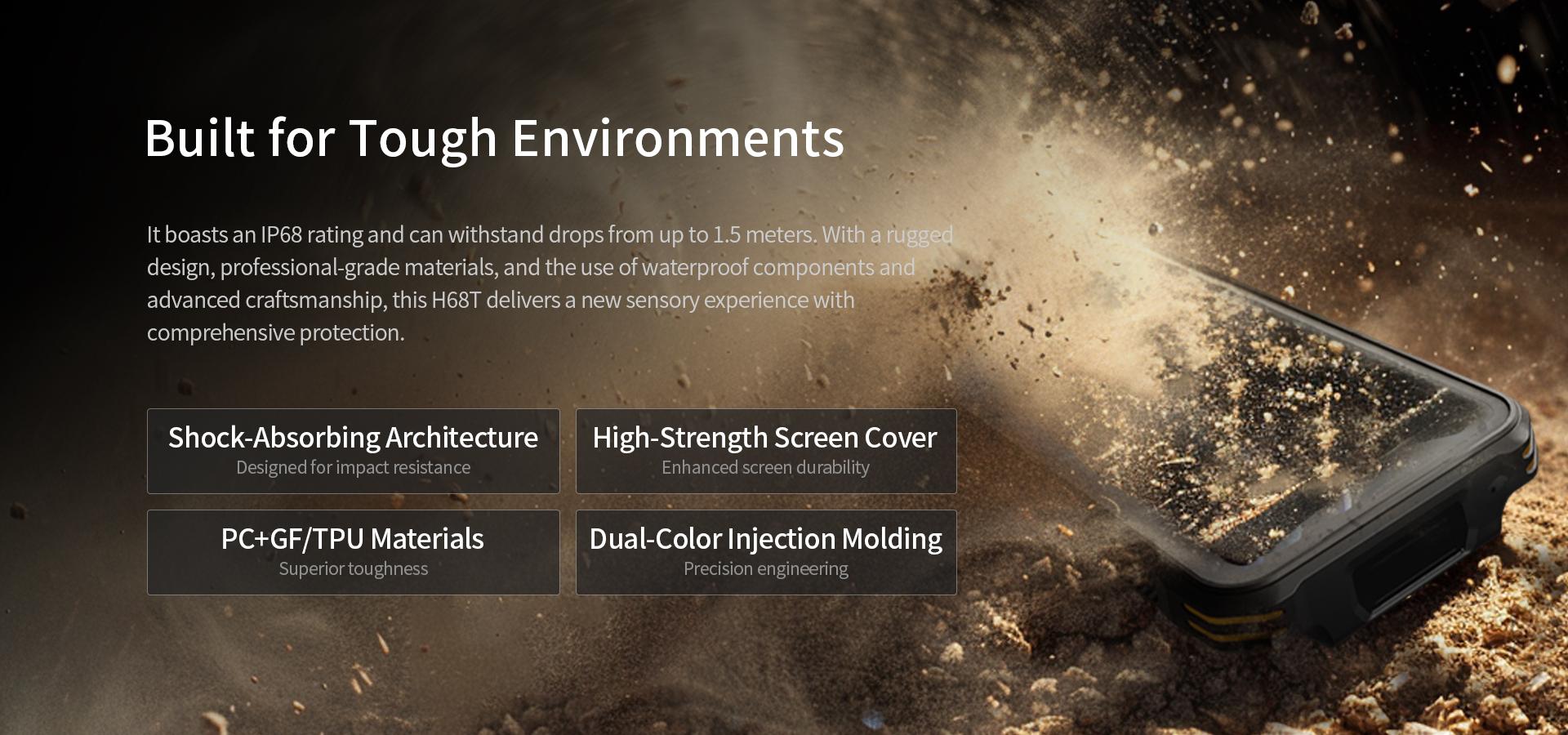
A rugged PDA (Personal Digital Assistant) scanner is an enterprise-grade mobile computer integrating an advanced hardware barcode imager within a reinforced, environmentally sealed chassis. Unlike consumer smartphones, it is engineered for continuous, high-volume data capture, offering multi-year operational lifecycles, advanced security protocols, and resilience against drops, extreme temperatures, and moisture.
This guide explores the architectural advantages of dedicated industrial mobile terminals, their impact on the total cost of ownership (TCO), and the key deployment considerations for enterprise IT leaders.
Industrial logistics facilities subject mobility hardware to extreme physical stress. Standard commercial devices frequently fail due to several core operational hazards:
Continuous Scan Cycles: Workers perform thousands of high-frequency scans per shift. Consumer camera-based scanning apps cause rapid processor throttling, lens lag, and severe operator fatigue due to a lack of tactile triggers.
Mechanical Drops and Shocks: Handheld terminals are regularly dropped onto concrete floors from sorting platforms or tumbled out of moving forklifts, causing structural fractures in non-reinforced devices.
Particulate Ingress: Loading docks, cross-docking zones, and bulk storage aisles constantly expose hardware to fine dust, abrasive particulates, and ambient moisture.
Extended Shift Durations: Industrial operations run on multi-shift or 24-hour schedules. Hardware must remain operational continuously without being tethered to a static charging station mid-shift.
To mitigate these disruptions, enterprise fleets require specialized terminals verified under rigorous MIL-STD-810H drop testing guidelines to guarantee long-term operational resilience.
Selecting the right hardware standard for a large deployment requires evaluating specific engineering and functional capabilities:
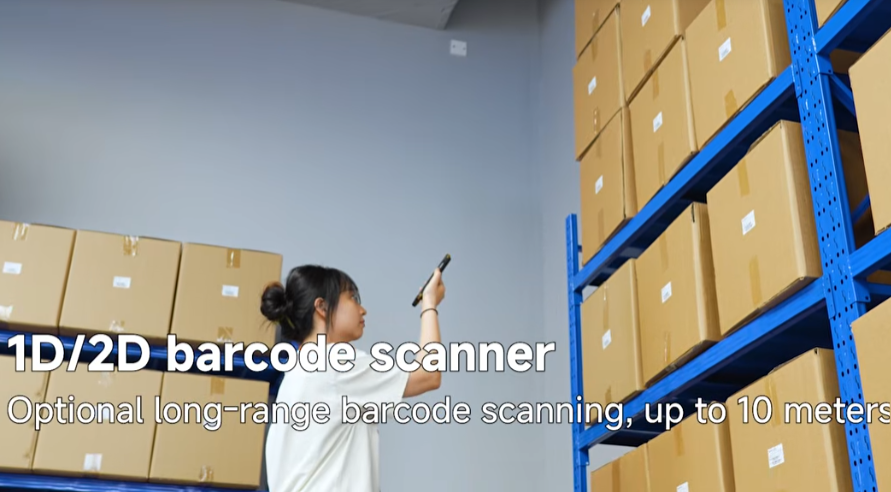
Industrial scanning demands instant data capture regardless of barcode quality. Advanced rugged PDAs feature dedicated hardware engines with an integrated GS1-128 and 2D imager. This architecture enables instantaneous decoding of smudged, torn, wrinkled, or low-contrast labels. Furthermore, these optical engines support advanced optical character recognition (OCR) to capture printed alphanumeric serial numbers directly from inbound freight manifests.
Frontline workflows require balanced weight distribution and heavy-duty physical scan triggers that provide tactical feedback. Displays must incorporate a Corning Gorilla Glass display panel integrated with a glove-compatible capacitive touchscreen that tracks inputs accurately even when exposed to water droplets, sweat, or heavy industrial work gloves.
To eliminate shift-change disruptions, next-generation terminals implement a hot-swappable battery backup circuit paired with a high-capacity smart battery cell. This allows an operator to change out a depleted battery right on the warehouse floor without losing their active database session or forcing an application reboot. Additionally, a fanless thermal architecture ensures efficient heat dissipation through an internal magnesium alloy frame, preventing internal component overheating.
| Evaluation Metrics | Consumer Smartphone | Standard Retail PDA | Enterprise Rugged PDA Scanner |
| Durability Standard | None (Fragile glass back) | Basic protective bumper | MIL-STD-810H drop testing certified |
| Ingress Protection | IP67 (Ports subject to corrosion) | IP54 (Indoor protection only) | IP67 dust and water sealing (Dust-tight) |
| Optics & Scanning | Camera-based (High scan latency) | Moderate linear laser | Dedicated GS1-128 and 2D imager engine |
| Display Engineering | Standard aluminosilicate glass | Basic acrylic panel | Corning Gorilla Glass display + Wet/Glove touch |
| Battery Lifecycle | Fixed internal cell (Degrades fast) | Removable (Requires reboot) | Hot-swappable battery backup configuration |
| Legacy Emulation | Not supported natively | Basic web-browser rendering | Ivanti Velocity terminal emulation certified |
Standardizing on a robust smart terminal with 2D imager architecture optimizes multiple operational touchpoints:
High-Bay Warehouse Picking: Operators can leverage extended-range scan engines to register pallets located on upper vertical storage tiers without leaving the vehicle cab.
Retail Backroom Receiving: Streamlines inbound sorting and verification by running simultaneous multi-barcode scanning arrays on mixed freight pallets.
Cold Chain Inventory Tracking: Specially insulated internal components prevent internal condensation and display fogging when transitioning from -20°C freezers to ambient loading docks.
Last-Mile Package Delivery: Equips field drivers with robust tools for electronic signature capture, barcode tracking, and real-time route updates under direct sunlight.
Direct Store Delivery (DSD) & Route Sales: Unifies route sales accounting data with physical stock audits right at the customer's storefront.
Deploying hundreds of mobile nodes across an industrial network requires strict software and configuration controls. Next-generation rugged terminals are engineered to integrate seamlessly into corporate IT ecosystems:
Unified Enrollment: Compliance with Android Enterprise Recommended standards ensures out-of-the-box compatibility with centralized SOTI MobiControl MDM suites for rapid staging and remote configuration updates.
Network Resilience: Integrated dual-band Wi-Fi radios utilizing fast-roaming protocols ensure workers remain connected to the WMS while moving through dense, metal-heavy racking arrays.
Data Integrity: Implements WPA3 enterprise security protocols to safeguard local wireless transmissions and protect proprietary corporate data from unauthorized interception.
Industrial digital transformation requires reliable edge computing hardware. Onerugged engineers a comprehensive portfolio of ultra-durable mobile data terminals designed specifically to lower the enterprise Total Cost of Ownership (TCO) while maximizing frontline productivity.
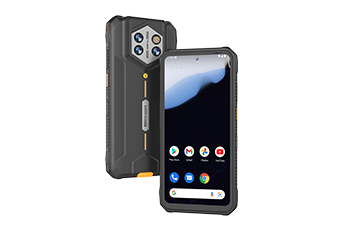
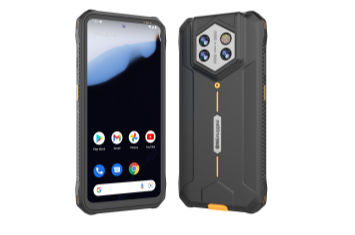
For intensive warehousing and logistics environments, the Onerugged H68T Rugged PDA stands out as an ideal deployment solution. Built within a highly resilient IP67 dust and water sealing chassis, the H68T combines an optimized octa-core processor with a high-performance 2D hardware imager.
Supported by a glove-compatible touchscreen, a hot-swappable battery layout, and full compatibility with enterprise MDM platforms, Onerugged terminals provide the physical durability and software stability required to keep your logistics operation moving forward.
An IP (Ingress Protection) rating defines a device's resistance to solids and liquids, while mechanical drop specifications (like MIL-STD-810H) dictate impact resilience. For rugged logistics operations, an IP67 dust and water sealing rating is recommended. The first digit (6) indicates the terminal is entirely dust-tight, preventing fine particulate debris from fouling internal circuitry. The second digit (7) certifies the device can survive full immersion in water up to 1 meter deep, ensuring it remains operational during heavy rain on outdoor loading docks or accidental spills.
Standard consumer capacitive displays measure the natural electrical change from bare skin, which causes them to fail or register false inputs when operated with work gloves or in wet conditions. Industrial-grade mobile computers utilize specialized high-sensitivity touch digitizers. These controllers dynamically adjust capacitive thresholds to register touch inputs through thick leather or synthetic glove materials and deploy filtering algorithms to disregard non-conductive water droplets, ensuring precise operation in any weather.
Yes. Modern industrial rugged scanners do not use traditional linear lasers that require perfect reflectivity. Instead, they utilize advanced 2D area-imaging sensors that capture high-resolution digital snapshots of the barcode. Integrated mathematical decoding algorithms then analyze the image, digitally clean up print defects, reconstruct missing segments of torn labels, and enhance faded contrast profiles to achieve a successful decode on the first trigger pull.