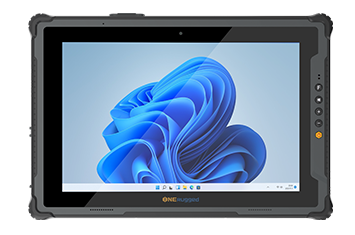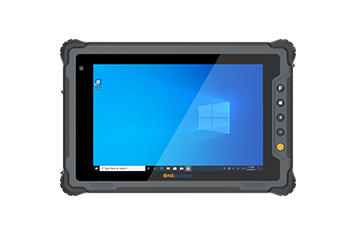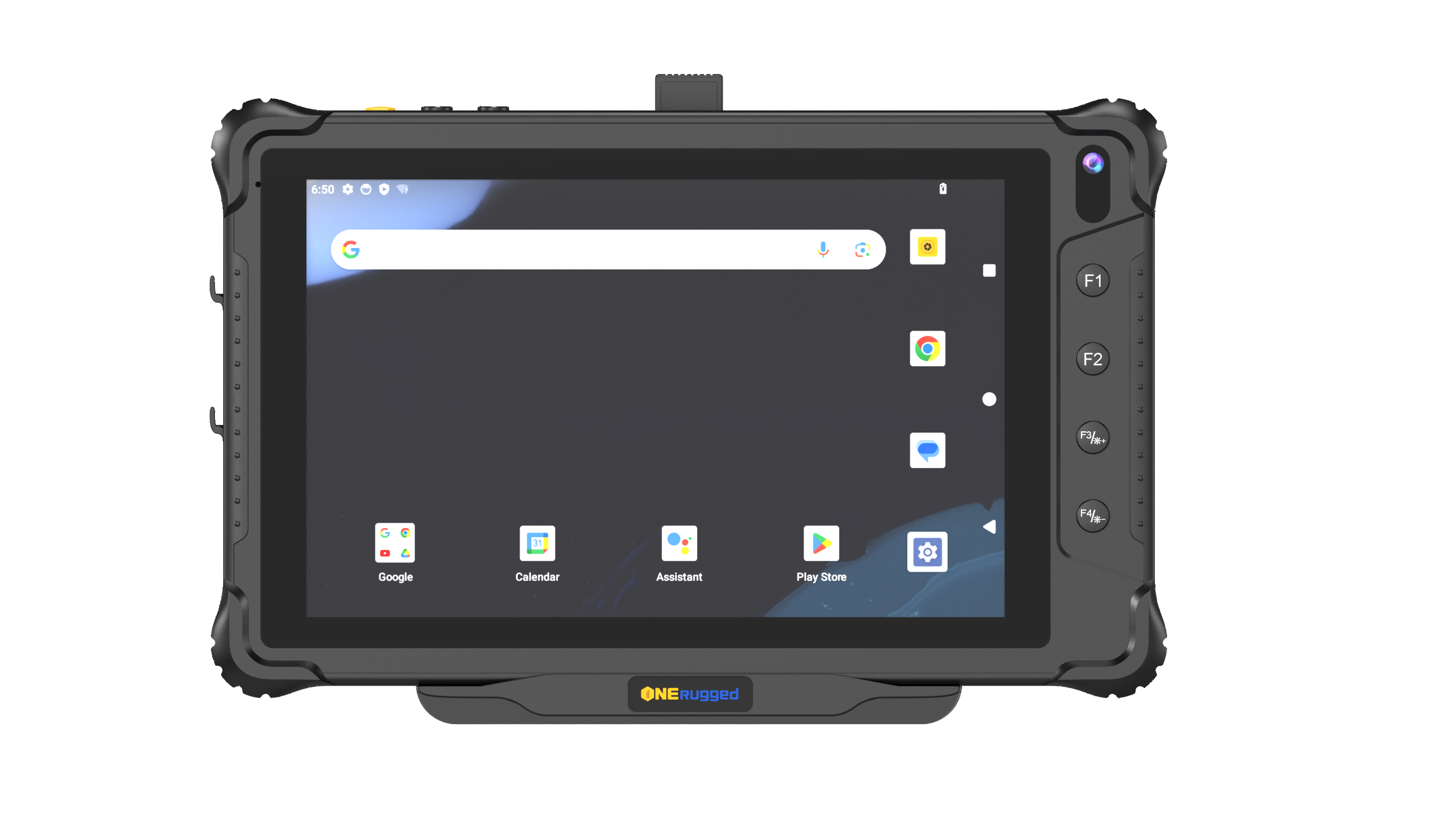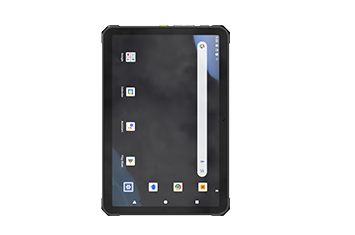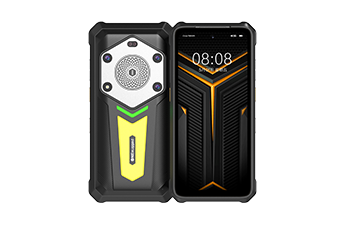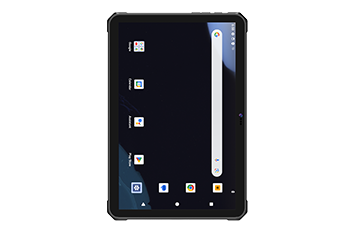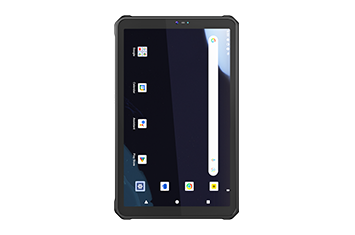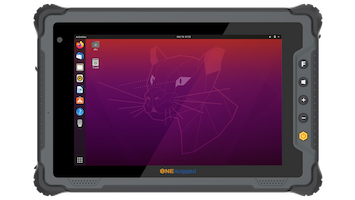

Enterprise operations frequently suffer severe financial losses due to unexpected hardware failures. When standard mobile hardware is deployed in harsh operational environments, the resulting operational downtime directly compromises workforce mobility and line-of-business continuity. The core conclusion for IT directors and procurement managers is clear: selecting the best rugged tablet requires moving beyond aftermarket consumer cases and investing in purpose-built, industrial-grade computing architectures. This comprehensive guide outlines the technical specifications, architectural ecosystems, and environmental standards required to maximize your return on investment and stabilize mission-critical data collection.
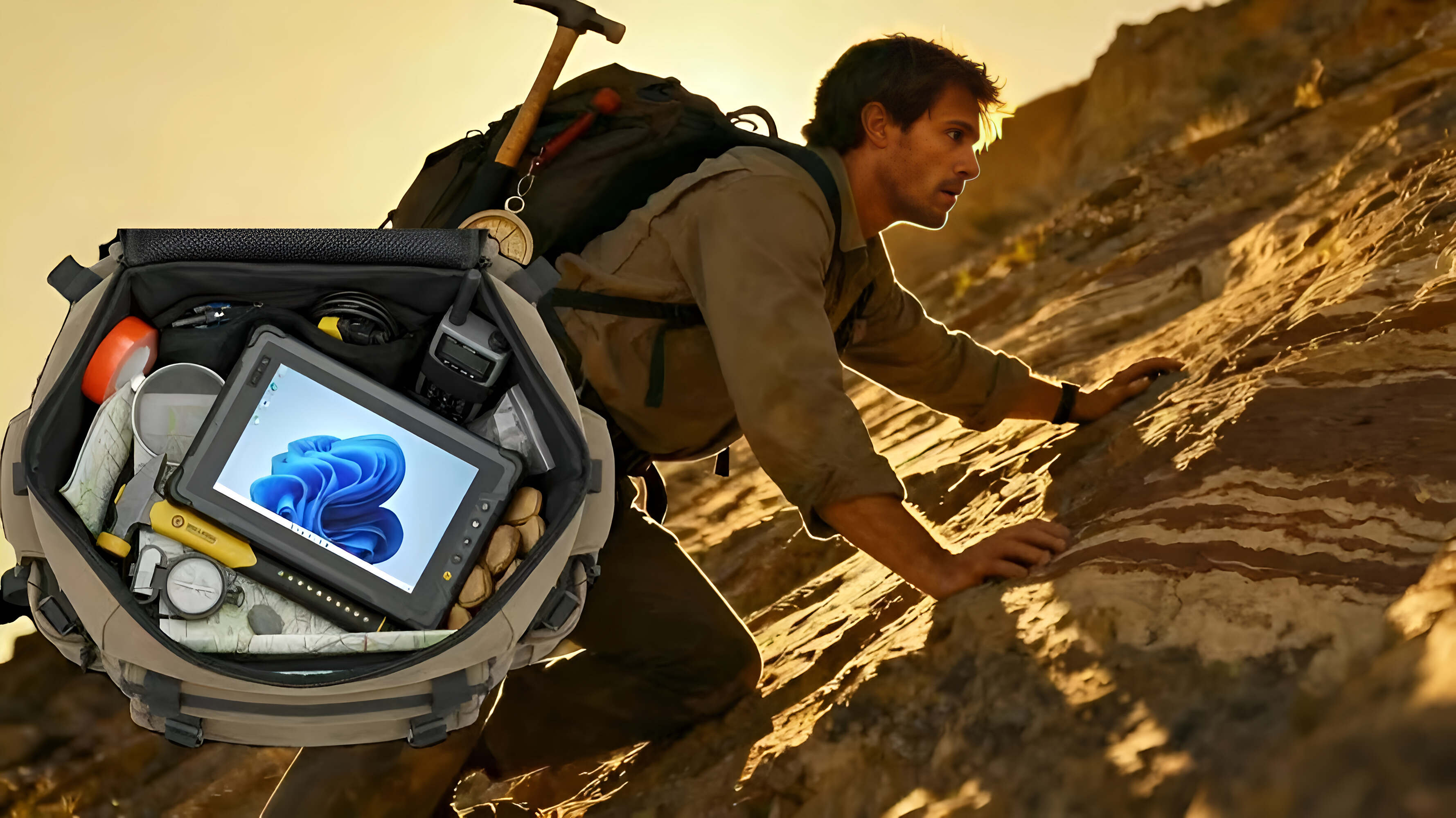
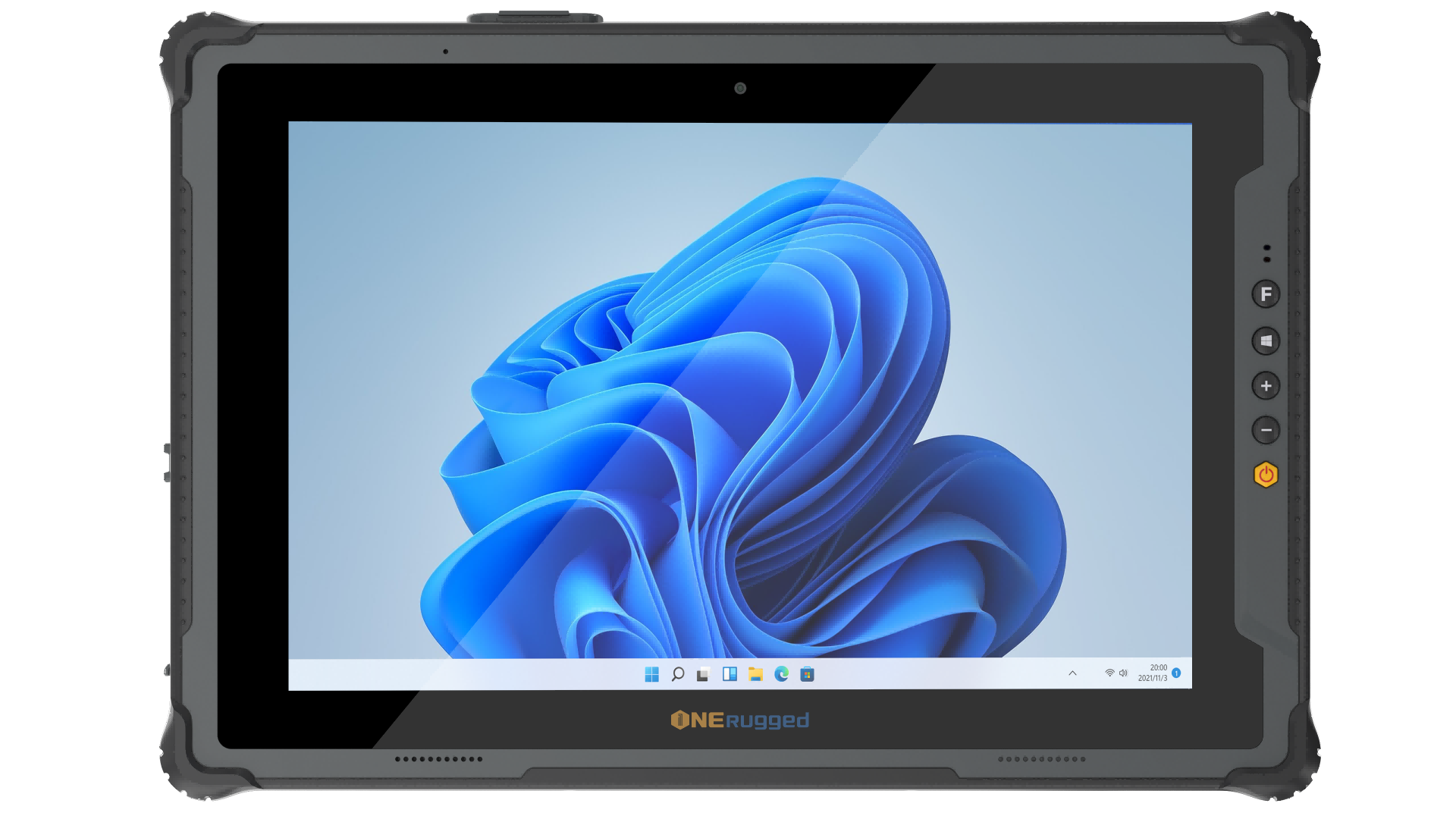
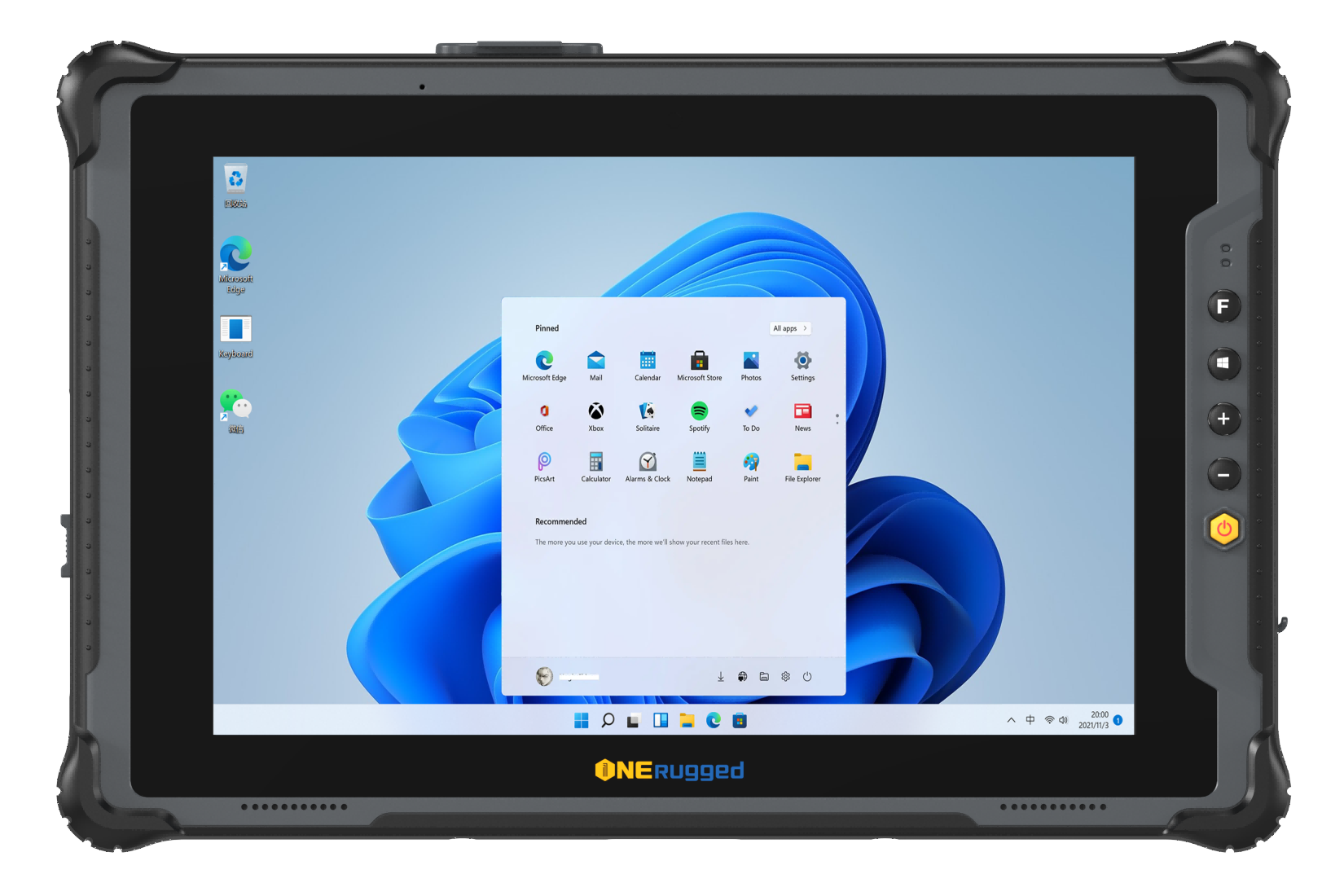
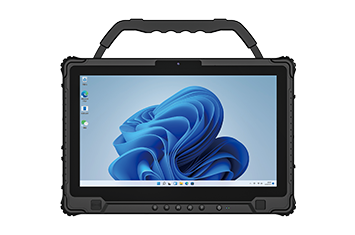
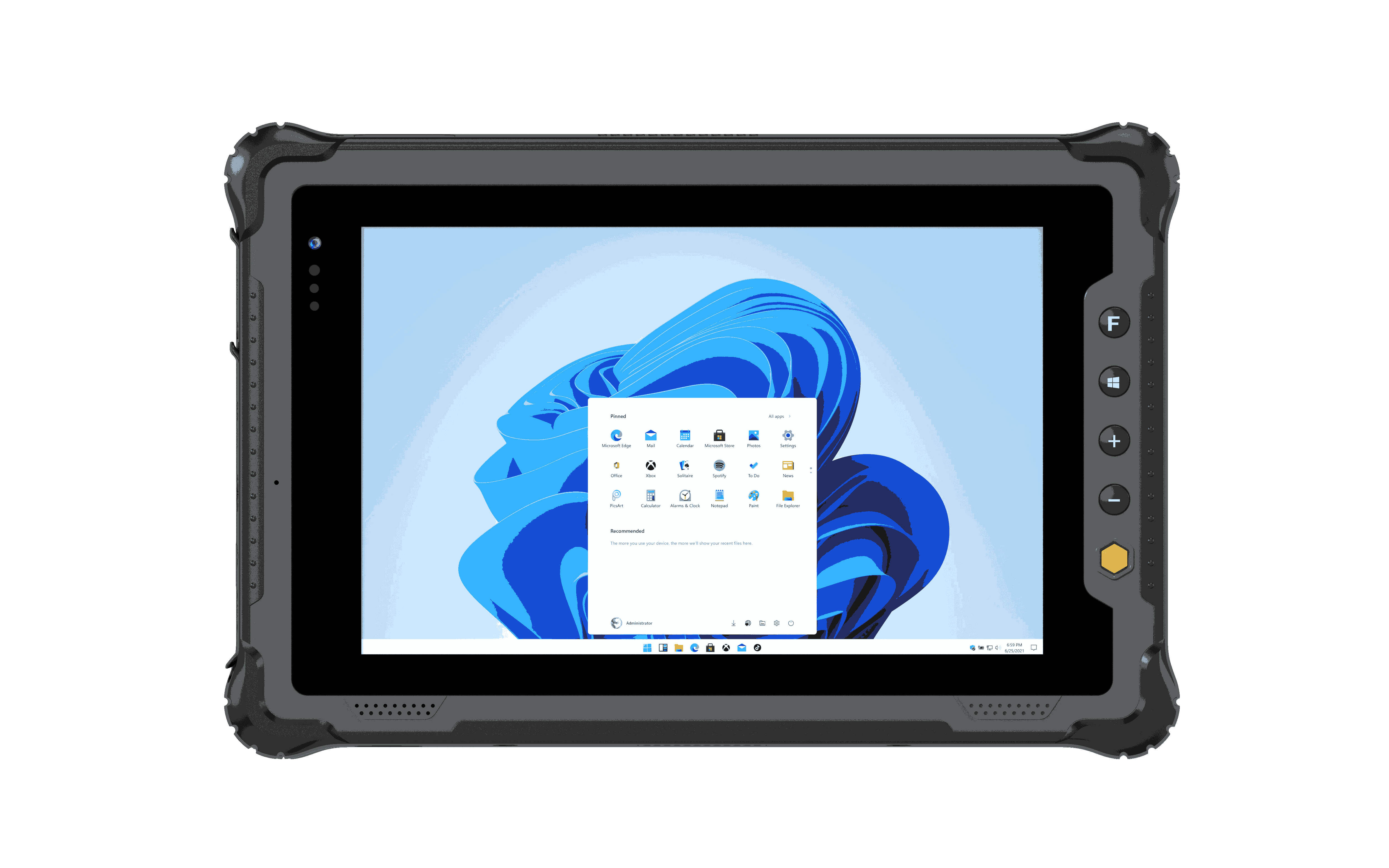
A fully rugged tablet is an industrial-grade tablet engineered from the motherboard up to survive continuous exposure to physical and environmental hazards. Unlike standard commercial hardware, these units feature magnesium alloy midframes, vibration-isolated component mounts, and specialized thermal engineering designed to completely bypass the need for an external cooling fan.
These devices are structurally engineered to be shock resistant, drop resistant, and vibration resistant, allowing them to maintain structural integrity under continuous mechanical stress. They provide reliable execution across hazardous or unpredictable deployment environments, functioning natively as a waterproof tablet wrapped within a highly sealed, impact-absorbing chassis.
| Feature Profile | Consumer Tablet | Semi-Rugged Tablet | Fully Rugged Tablet |
| Chassis Engineering | Plastic or thin aluminum; exposed glass glass borders | Reinforced polycarbonate; external rubber corner bumpers | Magnesium alloy internal skeleton; structural elastomer armor |
| Drop Survival Rating | < 0.9 meters (unprotected) | 0.9 to 1.2 meters to plywood | 1.2 to 1.8+ meters directly to concrete |
| Ingress Sealing | Unrated or IP68 (freshwater immersion only) | IP53 to IP54 (light dust and splashing water) | IP65 to IP68 (dustproof enclosure and jet-water proof) |
| Thermal Range | 0°C to 35°C (thermal throttling occurs rapidly) | -10°C to 50°C | -20°C to 60°C (extreme temperature operation) |
| Component Lifespan | 12 to 18 months | 2 to 3 years | 5 to 7 years (extended component availability) |
Industrial deployments require objective proof of survivability. Procurement specifications must mandate verified verification against international standardization frameworks rather than relying on generalized marketing claims.
The MIL-STD-810H standard is a rigorous testing matrix compiled by the US Department of Defense to evaluate a device’s environmental limits. Testing protocols dictate that the hardware must survive 26 drops from a height of 1.2 meters onto all faces, edges, and corners, alongside continuous exposure to multi-axis random vibration profiles.
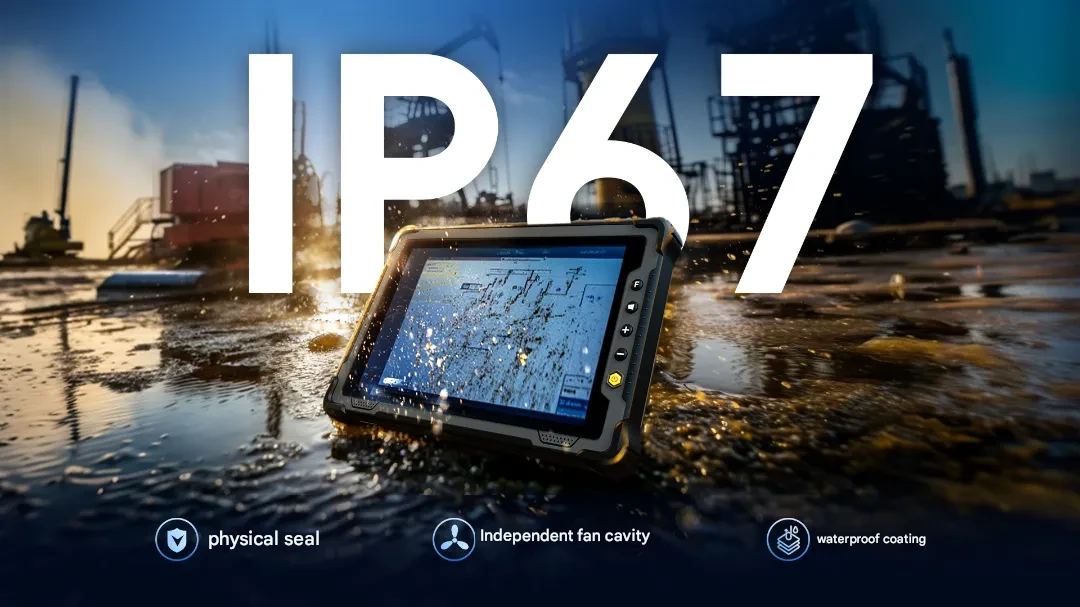
Ingress protection levels define the structural integrity of seals against particulate matter and liquids.
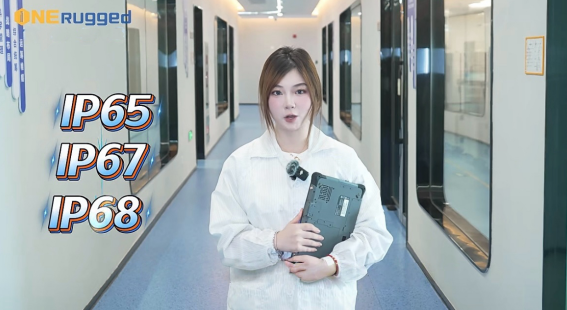
IP65: Complete protection against dust ingress; protection against low-pressure water jets from any angle.
IP67: Complete protection against dust ingress; protection against fluid immersion up to 1 meter for 30 minutes.
IP68: Complete protection against dust ingress; protection against continuous fluid immersion under higher pressure for extended intervals.
| Certification Standard | Technical Execution Parameter | Industrial Field Application |
| MIL-STD-810H (Shock/Vibration) | Method 514.8 (Random Vibration Category 24) | Continuous operations mounted on high-vibration engine blocks or heavy machinery. |
| MIL-STD-810H (Temperature) | Method 501.7 & 502.7 (High/Low Temp) | Uninterrupted processing when transitioning between desert sun and unconditioned facilities. |
| IP65 Waterproof | 6.3mm nozzle stream at 12.5 liters/minute | Reliable computing on outdoor maritime docks or washdown manufacturing plants. |
| IP67 Rating | Immersion test under 100 kPa of pressure | Survival during accidental submersion in flooded field utility trenches. |
To guarantee absolute operational reliability, enterprise system architects must look past generic specifications and isolate features engineered for sustained, heavy-duty industrial productivity.
Sunlight Readable Display: Outdoor operations demand a specialized sunlight readable display equipped with a 1000 nits display assembly and an anti-glare display layer to ensure viewability under direct overhead light.
Advanced Touch Interfaces: Touch panels must support advanced digitizer configurations, facilitating glove touch and wet touch tracking so operators can input data in freezing rain or while wearing thick protective gear.
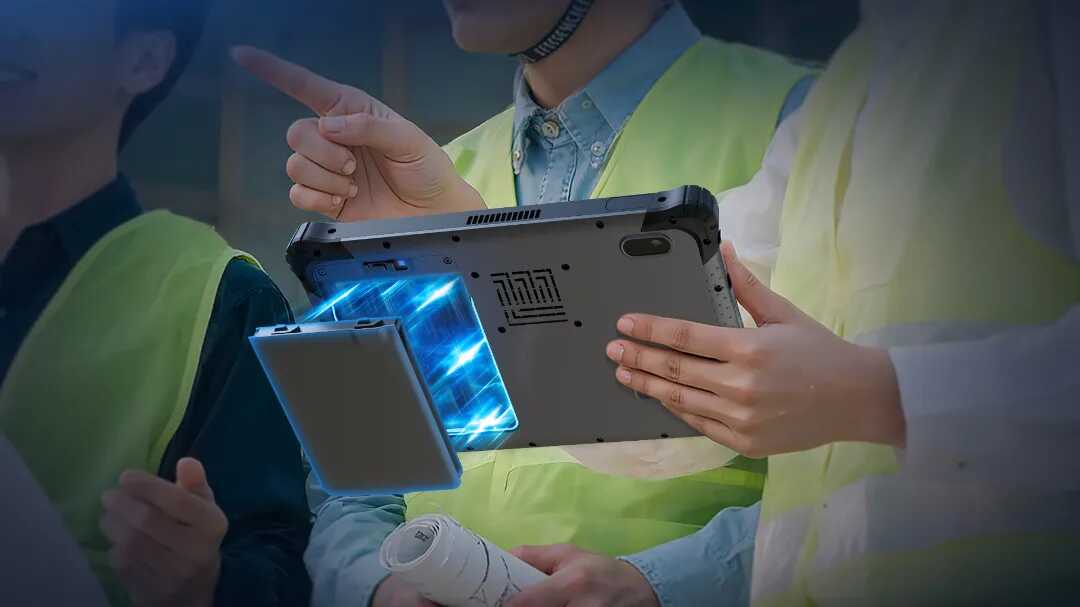
Continuous Power Architecture: A physical hot-swappable battery system allows field technicians to swap a depleted cell for a fresh one without shutting down the operating system, guaranteeing exceptionally long battery life across consecutive shifts.
Integrated Data Capture: Purpose-built workflows require dedicated modules, such as an integrated hardware barcode scanner, a high-frequency RFID reader, or an NFC module for immediate asset verification.
Robust Enterprise Connectivity: High-speed data synchronization depends on next-generation architecture, utilizing 5G connectivity, Wi-Fi 6, and an advanced GNSS module for highly precise location positioning.
Hardware-Level Security: Enterprise data integrity relies on TPM security (Trusted Platform Module 2.0), secure boot firmware verification, and full MDM support for remote administrative configuration.
The selection of the underlying operating system defines your enterprise software architecture, device lifecycle management, and application development pipelines.
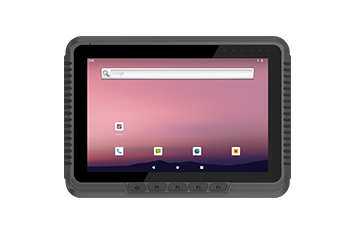
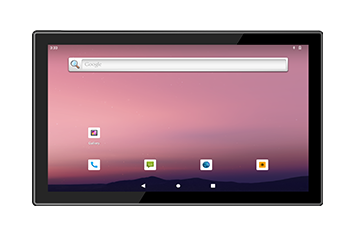
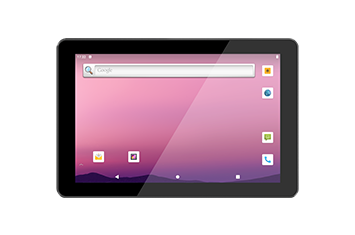
A rugged android tablet running Android 14 paired with an optimized Qualcomm processor delivers a lightweight, highly responsive, and energy-efficient architecture. It is the dominant choice for mobile software deployment, high-density warehouse scanning, and custom line-of-business applications.
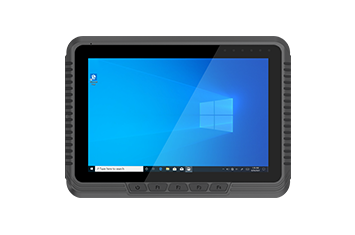
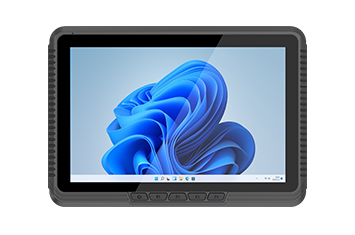
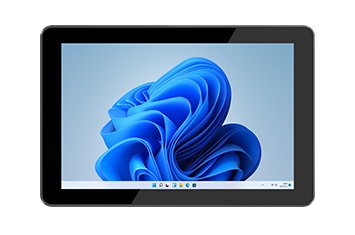
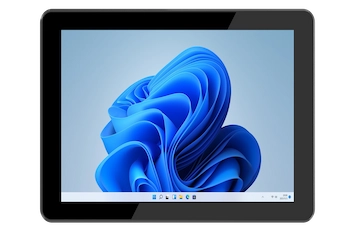
Conversely, a rugged windows tablet powered by Windows 11 IoT and a multi-core Intel Core processor provides seamless compatibility with enterprise Windows legacy applications. It functions as a full-featured portable workstation, allowing engineering teams to run localized ERP nodes, diagnostic software, and dense database applications without modification.
| Architectural Parameter | Android 14 Platforms | Windows 11 IoT Platforms |
| Processor Architecture | ARM Cortex (Qualcomm) | x86-64 CISC (Intel Core) |
| System Power Demands | Very low; optimized for high thermal efficiency | Moderate to high; requires substantial heat dissipation |
| Enterprise Software Stack | Native apps, web-based clients, cloud interfaces | Full legacy desktop clients, complex local databases, localized IDEs |
| Device Lifecycle Security | Android Enterprise Recommended / OEM patches | Long-Term Servicing Channel (LTSC) support |
| Deployment Suitability | High-mobility tasks, logistics picking, asset scanning | Heavy field diagnostics, precision mapping, HMI control |
In modern warehouse management environments, consumer-grade tablets fail due to repetitive vibrations from material handling machinery and sudden concrete drops. Industrial devices equipped with integrated barcode scanners ensure high-frequency inventory tracking. Secure forklift mounting setups with robust charging connection points ensure the tablet remains secured and powered despite continuous physical shock.
During high-velocity logistics operations, field units must endure shifting cabin temperatures, continuous vibration, and prolonged vibration patterns. Drivers utilize rugged mobile hardware to manage route manifests, verify signatures, and coordinate electronic logging device (ELD) compliance while shifting between vehicle docks and outdoor delivery environments.
Standard mobile touchscreens lock up and batteries quickly lose charge when exposed to sub-zero temperatures. Rugged tablets engineered for cold-chain facilities feature built-in display heaters and specialized low-temperature battery chemistries. This ensures total software functionality and prevents internal condensation damage when moving between blast freezers and loading docks.
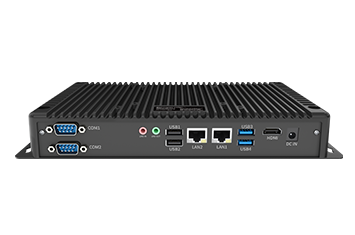
As industrial facilities implement digital transformation frameworks, rugged tablets serve as the primary human-machine interface (HMI) for manufacturing automation systems. Technicians require robust physical interfaces, including legacy RS232 serial port configurations alongside USB Type-C ports, to communicate directly with programmable logic controllers (PLCs) on the factory floor.
Efficient fleet management relies on persistent real-time telematics tracking and reliable communication interfaces. Rugged tablets equipped with dual-band GPS and active vehicle docks enable logistics managers to monitor vehicle health, optimize routing schedules, and ensure continuous driver compliance over long-haul routes.
Field crews conducting utility maintenance must execute repair strategies under extreme weather conditions. Tablets deployed in this sector require heavy ingress protection (IP67 or higher) and high-brightness displays to allow technicians to view complex electrical or water grid infrastructure maps during storms or direct sunlight.

Upstream and downstream operations involve explosive atmospheres where standard electronic devices can act as ignition sources. Inspectors rely on specialized hardware carrying ATEX certification or Class I, Division 2 ratings. This ensures the device maintains an intrinsically safe profile while capturing real-time pipeline telemetry.
First responders operating in public safety and emergency response contexts require immediate, absolute reliability. Rugged tablets deployed in police, fire, or ambulance fleets feature dedicated physical buttons, high-strength secure locking docks, and high-priority 5G network integration to maintain uninterrupted communication during critical incidents.
Selecting the ideal industrial device configuration requires a systematic evaluation of operational demands, software dependencies, and total cost of ownership.
Conduct an Environmental Audit: Quantify the maximum drop threats, exact particle sizes, and potential chemical exposures within the workspace to determine if your application requires an IP65, IP67, or IP68 architecture.
Determine the Operating System Base: Analyze your existing enterprise application portfolio. If running local desktop applications or heavy diagnostic routines, select Windows 11 IoT; for lightweight, cloud-based, or app-centric workflows, deploy Android 14.
Map Perimeter Connectivity Requirements: Evaluate the physical landscape of the rollout. Densely shielded structural environments require advanced Wi-Fi 6 MIMO arrays, while remote field service tasks demand high-speed 5G connectivity.
Isolate Integrated Peripheral Needs: Avoid fragile external bolt-on scanning modules. Match the specific data-collection demands of the operator to integrated, internal hardware setups such as dedicated 2D imaging engines or high-frequency RFID systems.
Design the Accessory and Ergonomic Ecosystem: Review physical usage patterns. Select heavy-duty vehicle mounts, specialized desktop charging cradles, or active pogo-pin configurations to optimize device charging and usage speed.
Calculate the Comprehensive TCO: Factor in long-term support metrics. Compare the initial cost of a fully rugged tablet against the cumulative replacement costs, administrative overhead, and lost productivity associated with frequent consumer tablet failures over a 5-year cycle.
The landscape of industrial mobile computing is evolving toward high-performance decentralized processing. Edge computing architectures now allow rugged hardware to run heavy machine-learning models locally on the device, minimizing the need to transmit raw datasets back to a centralized cloud server.
Furthermore, as facilities build out smart manufacturing ecosystems, the integration of industrial IoT protocols allows tablets to act as mobile coordination hubs, communicating directly with sensor arrays distributed throughout a facility. Combined with private 5G network rollouts, field technicians can leverage real-time spatial analytics, predictive maintenance modeling, and zero-latency telemetry tracking directly from the field.
An IP67 rating ensures the chassis is sealed against dust and water immersion under static conditions, but it does not account for the rapid pressure and temperature differentials found in industrial cold storage. When a device transitions from a -20°C freezer to a warm loading dock, the air inside the chassis contracts and cools, drawing moisture across standard seals and causing internal condensation on the circuit boards. True cold-chain reliability requires specialized rugged tablets equipped with internal multi-zone heater elements, optically bonded displays, and low-temperature optimized battery cells.
Oil and gas extraction areas are highly volatile zones that require intrinsically safe electrical equipment. Standard MIL-STD-810H and IP ratings are insufficient because they do not evaluate ignition risks. Inspections in these sectors mandate ATEX Zone 2/22 certification within Europe or Class I, Division 2 (C1D2) certification within North America. These standards ensure that under normal operation or specific fault conditions, the tablet cannot produce an electrical spark or surface temperature high enough to ignite airborne hydrocarbon gases or vapor mixtures.
Yes. Modern Android rugged hardware integrates cleanly with legacy enterprise resource planning (ERP) systems and warehouse management systems (WMS) through advanced terminal emulation (TE) clients and secure browser engines. These applications wrap older "green screen" command-line interfaces into touch-optimized graphical elements, allowing older telnet-based backend systems to interface natively with the hardware scanning engines without rewriting central server code.
Commercial tablets operate on a 12 to 18-month consumer lifecycle before component availability dries up, forcing IT departments to manage an inefficient mix of hardware variations. In contrast, enterprise rugged tablets deliver a stable lifecycle profile of 5 to 7 years. This extended timeframe includes long-term component availability, matching spare parts pipelines, and extended operating system security patch support, significantly reducing overall IT administrative overhead.
MIL-STD-810H and IP68 are completely separate validation frameworks that evaluate distinct durability attributes. IP68 evaluates ingress sealing performance against particulate matter and water under hydrostatic pressure; it provides zero metrics regarding drop survival, structural impact resistance, or thermal shock. MIL-STD-810H is a multi-category military test suite focusing on structural impact, shock wave survival, high-frequency vibration, fungal growth, and extreme operational temperatures. An elite device requires validation under both testing frameworks to guarantee full field ruggedness.
Deploying fragile, consumer-grade tablets in challenging industrial settings introduces substantial business risks, including unbudgeted operational downtime, compromised security, and frequent equipment replacement costs. Secure your operations by upgrading your mobile infrastructure with purpose-built hardware designed for heavy industry.
Ready to upgrade your field operations?
Explore Onerugged's complete line of fully rugged devices or contact our sales team for a custom deployment strategy.